Rilis
Sebuah Kisah Eks Migran

Published
13 years agoon
By
Mitra Wacana
Oleh Imelda Zuhaida
Beberapa waktu lalu, penulis bertemu dengan para mantan buruh migrant di kecamatan Kokap Kulon Progo. Dikisahkan oleh seorang perempuan bernama Sukini (36 tahun)yang berangkat ke Taiwan sebagai PRT. Perempuan lulusan SMEA Negeri Wates jurusan pemasaran ini, diajak oleh orang Wates yang merupakan perwakilan dari PJTKI yang berdomisili di Jakarta. Sukini berangkat bersama teman-temannya ke Jakarta. Di Jakarta dia bersama teman-temannya ditampung selama 5 bulan untuk mengikuti training memasak, merawat bayi dan bahasa.
Dalam kontrak kerjanya tertera dia sebagai pramurukti (merawat orang tua) selama 2 tahun tetapi sesampai disana, dia harus mengerjakan seluruh pekerjaan rumah dengan jam kerja selama 12 jam sehari, mendapat libur 1 hari dalam 1 bulan. Selama di Taiwan, Sukini mendapat gaji sekitar 4,5 juta,rupiah dipotong oleh PJTKI sebanyak 1 juta rupiah selama 1 tahun untuk biaya keberangkatan. Sukini memperpanjang kontraknya menjadi 3 tahun. Setelah pulang, atas kebaikan majikannya, dia diberi hadiah emas sebanyak 10 gram.
Saat pulang ke Indonesia, di bandara Sukini sangat ketakutan oleh para calo. Dia berharap, pemerintah memberikan jaminan keamanan saat kepulangan TKI di bandara.
Hasil dari pendapatan selama Sukini merantau, Sukini bisa membeli kebun kelapa sawit sebanyak 2 hektar dengan harga 60 juta rupiah di Riau yang dikelola oleh mertuanya. Penghasilan dari kelapa sawit ini antara 2 juta rupiah hingga 6 juta rupiah, tergantung jumlah panen. Uang ini dia gunakan untuk memenuhi kebutuhan sehari-hari karena suaminya juga tidak mempunyai pekerjaan tetap.
Jika dilihat pelanggaran yang terjadi, Sukini sudah diperlakukan tidak adil. Dimulai saat di penampungan, sering terjadi kekerasan verbal (dibentak) jika melakukan sedikit kesalahan. Yang kedua, dikontrak kerja yang hanya pramurukti, dia harus mengerjakan pekerjaan rumah tangga penuh. Ketiga, pemotongan gaji sebanyak 12 juta rupiah yang tidak disampaikan sejak awal pemberangkatanKarena Sukini tidak pilihan saat itu, dia hanya pasrah.
Lain halnya dengan Sunarti (30 tahun) seorang lulusan SMK PGRI Sentolo. Dia berangkat dua kali ke negeri Malaysia. Yang pertama selama 2 tahun, dia sebagai tenaga di pabrik IC untuk pesawat dan telpon genggam. Dia berangkat ke Malaysia karena ajakan temannya yang pernah menjadi TKI di Malaysia melalui PJTKI yang ada di Yogya. Sebelum diberangkatkan, Sunarti sempat tinggal di penampungan di Solo selama 1 hari.
Upah yang diterimakan sebanyak 430 Ringgit atau sekitar 2 juta Rupiah sesuai dengan standar UMR Malaysia saat itu dengan jam kerja 12 jam, istirahat 2 kali untuk sholat dan makan, masing-masing 15 menit. Sebelum bekerja, Sunarti mendapatkan training selama 2 bulan. Kepergian Sukini ke negeri Jiran yang kedua dengan PJTKI yang berbeda, dia harus membayar uang awal 5 juta yang dia dapatkan dari orang tuanya dengan menjual kayu. Di perusahaan yang kedua ini, Sukini sering mendapat perlakuan kekerasan dari mandor pabrik jika melakukan kesalahan.
Hasil dari merantau selama 4 tahun di Malaysia, Sukini yang kini beraktivitas sebagai pembuat wig (rambut palsu) ini, tidak sebanding dengan jerih payahnya. Jangankan untuk mengembalikan uang tuanya 5 juta yang dipinjam untuk keberangkatan, dia hanya bisa untuk membeli TV, selebihnya habis untuk biaya konsumsi disana, meskipun dia tinggal di asrama.
Meskipun saat Pemilu, tetap dilibatkan atas fasilitas perusahaan, namun Sukini mengaku tidak akan kembali ke Malaysia karena tidak kerasan karena kerjanya tidak manusiawi. Ada lagi, Tumiyati (36 tahun) berangkat ke Malaysia tahun 2000 sebagai pekerja di pabrik kayu lapis melalui PJTKI Persada Duta Utama Wates dengan biaya 3 juta yang didapat dari hutang . Sebelum berangkat, dilakukan training selama 3 bulan. Tumiyati merantau ke negeri jiran dengan kontrak 3 tahun, kemudian diperpanjang 2 tahun, kemudian 1 tahun, sehingga total 6 tahun.
Perjalanan menuju Malaysia menggunakan kapal laut selama 1 minggu yang singgah di Tarakan dan Towawu. Gaji yang diterima 8 ringgit dengan beban kerja 600 lembar kayu lapis per hari. Jam kerja 12 jam dengan waktu istirahat 15 menit 2 kali untuk ibadah dan makan. Melihat pengalaman yang pahit, dari modal awal untuk keberangkatan, proses pengangkutan, beban kerja dan gaji yang sangat tidak manusiawi. Makanya Tumiyati memilih untuk tidak menjadi buruh migran lagi.

You may like

Berita
Bioskop Rakyat Fest #03 Sukses Digelar di Demangrejo: Padukan Seni Budaya, Kampanye Anti-Perdagangan Orang, dan Pemberdayaan Desa
Published
5 hours agoon
24 August 2026By
Mitra Wacana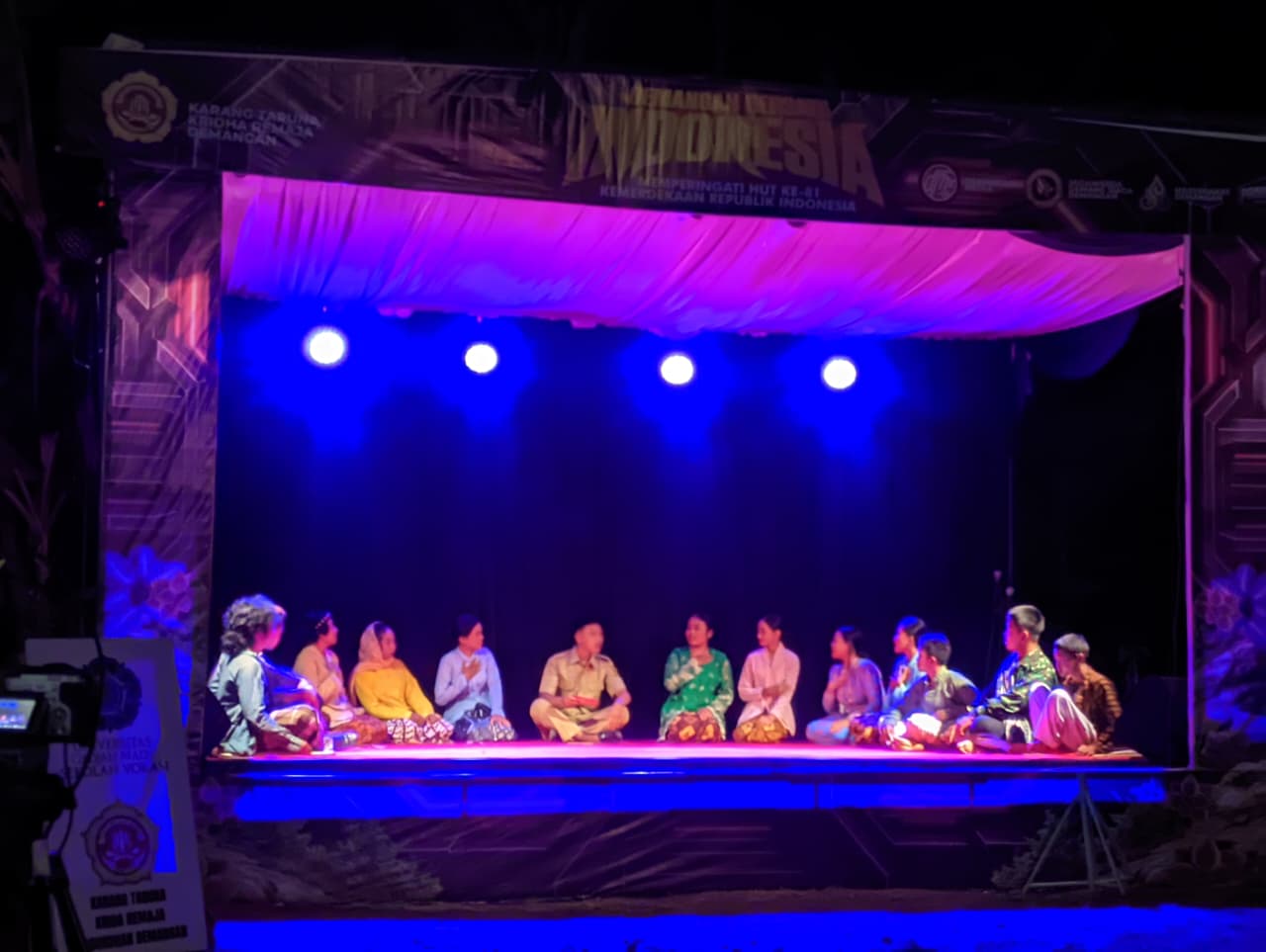
KULON PROGO, 22 AGUSTUS 2026 – Padukuhan Demangan, Kalurahan Demangrejo, Kapanewon Sentolo, Kabupaten Kulon Progo, kembali sukses menggelar perhelatan akbar tahunan Bioskop Rakyat Fest #03 pada Sabtu, 22 Agustus 2026. Mengusung tema Demangan Bersatu Indonesia: Bioskop Rakyat Fest #03 Sinergi Desa Kolaborasi & Karya dari Karang Taruna, Akademisi, dan Organisasi Masyarakat Sipil. Festival ini menjadi ajang unjuk kreativitas warga sekaligus wahana edukasi yang kuat mengenai pencegahan Tindak Pidana Perdagangan Orang (TPPO) dan Semangat Nasionalisme dalam rangkaian Kemerdekaan RI ke-81.
Acara yang dipusatkan di halaman rumah Dukuh Demangan, Bapak Heriyanto, ini diselenggarakan oleh Karang Taruna Krida Remaja dan Demangan Media Channel (DMC), yang berkolaborasi erat dengan Program Pengabdian Masyarakat Sekolah Vokasi Universitas Gadjah Mada (UGM) dan lembaga swadaya masyarakat Mitra Wacana.
Dari Panggung Hiburan hingga Pesan Moral Kemanusiaan Bioskop Rakyat Fest #03 menghadirkan beragam rangkaian acara lintas generasi yang sangat menghibur, mulai dari penampilan Tari Semut oleh anak-anak TK dan PAUD, Tari Perahu Layar, hingga aksi panggung “Nyentrik Demangan Squad” yang dibawakan oleh ibu-ibu Padukuhan Demangan.
Puncak kesenian malam itu adalah pementasan drama teater bertajuk “Surat Soko Tahun 2045” garapan Wulan Karangtaruna Krida Remaja Padukuhan Demangan sekaligus Mahasiswi ISI Yogyakarta. Drama ini sukses memukau dan menyentuh hati penonton dengan pesan mendalam tentang pentingnya menjaga semangat gotong royong, guyub rukun, dan kepedulian antarwarga di tengah arus modernisasi dan individualisme yang semakin deras. Yang dibawakan pemuda-pemudi karang taruna Demangan dengan koreografi, visual dan tata suara profesional.
Kampanye “Menungso Ora Didol” (Manusia Tidak Untuk Dijual) Lebih dari sekadar hiburan, Bioskop Rakyat Fest #03 menjadi medium strategis penyampaian edukasi masyarakat. Bekerja sama dengan Mitra Wacana, panitia memutar karya film lokal dari Demangan Media (DMC) yang mengangkat isu toleransi dan pencegahan perdagangan orang bagi calon pekerja migran.
Robi Setiyawan, perwakilan dari Mitra Wacana dalam sambutannya menekankan pentingnya kewaspadaan masyarakat terhadap iming-iming lowongan kerja ke luar negeri dengan gaji fantastis. “Program kita adalah pencegahan perdagangan orang, supaya anak-anak muda kita terhindar dari penipuan calo lowongan kerja ilegal. Intinya, menungso ora didol (manusia tidak untuk dijual). Jika ada tawaran pekerjaan ke luar negeri, pastikan untuk mengecek legalitasnya ke kelurahan atau Pak Jogoboyo terlebih dahulu, jangan berangkat secara unprosedural,” tegas Robi.
Sinergi dan Kemandirian Desa Penggagas Bioskop Rakyat Fest #03, Aji Saputra sekaligus Jogoboyo Kalurahan Demangrejo, dalam sambutannya menyampaikan apresiasi setinggi-tingginya kepada seluruh pihak yang telah mendukung jalannya acara. “Terima kasih kepada Sekolah Vokasi Universitas Gadjah Mada dan Mitra Wacana yang terus mendukung dan mendampingi, serta seluruh warga Padukuhan Demangan. Harapan kami, melalui ajang ini, pemuda-pemudi Demangan dapat terus berprestasi dan membawa hal positif bagi desa kita,” ujarnya.
Ajang ini juga menjadi bukti keberhasilan pendampingan Sekolah Vokasi UGM dalam mengedukasi warga terkait manajemen acara (event management) dan pemasaran UMKM. Sepanjang acara, berbagai stand UMKM lokal Demangan turut meramaikan panggung dan menghidupkan roda ekonomi warga, menjadikan Bioskop Rakyat ini sepenuhnya mandiri dan berdaya.
Menutup kemeriahan malam, Bioskop Rakyat Fest #03 memberikan kejutan inovatif berupa suguhan musik pamungkas dari DJ VWXYZ dan DJ Sastro (Sastrologi). Suguhan ini membuktikan bahwa kreativitas dan acara tingkat dusun mampu dikemas secara profesional, kreatif, dan kekinian.