Rilis
Press Release Aksi Mogok Makan: Menolak Pembangunan Bandara di Kulonprogo Yogyakarta

Published
11 years agoon
By
Mitra Wacana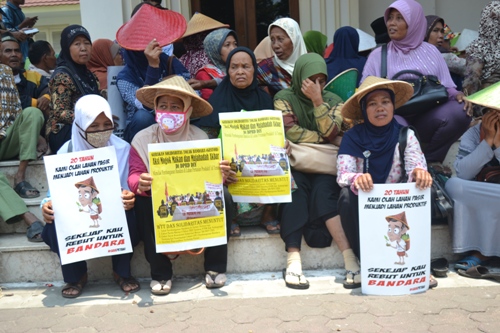
Putusan Mahkamah Agung Republik Indonesia (MA) dengan nomer register 465K/TU/2015 yang mengabulkan kasasi Gubernur Daerah Istimewa Yogyakarta, melegitimasi kembali Surat Keputusan Gubernur Daerah Istimewa Yogyakarta Nomer: 68/KEP/2015 tentang Izin Penetapan Lokasi (IPL) pembangunan Bandara Internasional di Temon Kulon Progo, yang sebelumnya petani Temon Kulon Progo yang tergabung dalam Wahana Tri Tunggal (WTT) menolak pembangunan bandara memenangkan sidang gugatan IPL di Pengadilan Tata Usaha Negara DIY (PTUN). Izin Penetapan Lokasi (IPL) yang diterbitkan oleh Gubernur DIY pada 31 Maret 2015 dengan SK Nomer 68/KEP/2015, Bandara Internasional akan dibangun di lahan seluas 645,63 hektar di kecamatan Temon kabupaten Kulon Progo di lima desa yang meliputi: Desa Glagah, Sindutan, Jangkaran, Kibonrejo, dan Palihan.
Pembangunan bandara internasional di kecamatan Temon Kulon Progo, merupakan mega-proyek Kulon Progo, serta merupakan program MP3EI di Yogyakarta. Pembangunan bandara internasional proses awalnya di mulai dari MoU antara pemerintah Indonesia yang diwakili oleh PT Angkasa Pura (Persero) dengan investor asal India GVK Power & Infranstructure pada tanggal 25 Januari 2011 di India. Kerjasama ini berbentuk perusahaan patungan (Joint Venture Company) dengan masing-masing pihak memiliki hak atas kepemilikan saham dan pembangunan tersebut senilai US$ 500 juta.
Pembangunan Bandara baru di Kulon Progo yang juga berpedoman pada Peraturan Daerah (Perda) Nomer 1 tahun 2012 tentang Rencana Tata Ruang Wilayah (RTRW) kabupaten Kulon Progo tahun 2012-2032 yang dimana perda RTRW kabupaten Kulonprogo tersebut bertentangan dengan Undang-undang Nomer 26 tahun 2007 tentang penataan ruang. Peraturan Pemerintah Nomer 26 tahun 2008 tentang rencana tata ruang wilayah nasional, peraturan presiden no 28 tahun 2012 tentang rencana tata ruang wilayah provinsi daerah istimewa Yogyakarta 2009-2029.
Dengan ini, jelas bahwa peraturan perundang-undangan dari tingkat nasional sampai pada tingkat provinsi secara konsisten hanya menyebutkan pengembangan bandara Adisutjipto dan bandara Adi Sumarmo sebagai satu sistem jaringan Transportasi Udara di Wilayah D.I. Yogyakarta-Jawa Tengah tidak ada penetapan wilayah baru pembangunan bandara baru terlebih di kecamatan Temon Kulon Progo. Setelah putusan MA yang mengabulkan kasasi yang diajukan oleh Gubernur DIY terkait IPL, maka tahapan berikutnya akan terjadi pembebasan lahan. Ada sekitar 2.875 kepala keluarga atau 11.501 jiwa masyarakat terdampak atas pembangunan bandara yang kebanyakan bermata pencaharian petani yang sudah menjadi tumpuhan hidup harus kehilangan lahan pertaniannya yang produktif, sebagai bentuk perjuangan untuk mempertahankan hak atas ruang hidup, kami Wahana Tri Tunggal (WTT), bersama kawan-kawan solidaritas baik dari sektor rakyat dan juga elemen mahasiswa yang tergabung dalam Gerakan Solidaritas Tolak Bandara (GESTOB) melakukan aksi mogok makan dan menuntut:
1). Tolak Pembangunan bandara di Temon, Kulonprogo 2). Cabut Perda nomor 1 tahun 2012. Tentang RTRW Kabupaten kulonprogo tahun 2012-2032. 3). Cabut Surat keputusan Gubernur Nomor 68/KEP/2015 tentang izin penetapan lokasi (IPL) pembangunan Bandara di Temon Kulon Progo. 4). Hentikan Represifitas terhadap Petani.
Yogyakarta 26 Oktober 2015

You may like


Berita
Bioskop Rakyat Fest #03 Sukses Digelar di Demangrejo: Padukan Seni Budaya, Kampanye Anti-Perdagangan Orang, dan Pemberdayaan Desa
Published
18 hours agoon
24 August 2026By
Mitra Wacana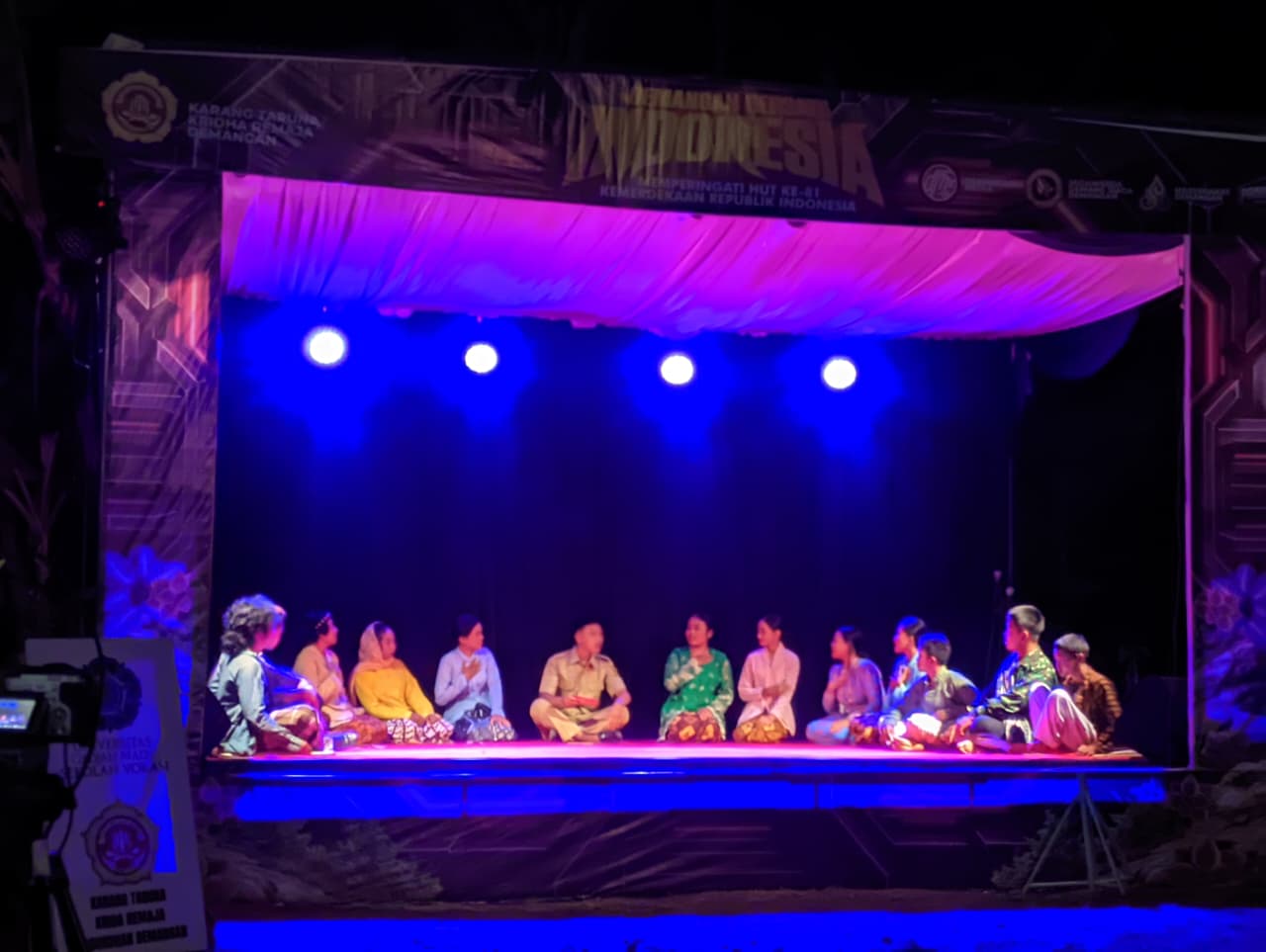
KULON PROGO, 22 AGUSTUS 2026 – Padukuhan Demangan, Kalurahan Demangrejo, Kapanewon Sentolo, Kabupaten Kulon Progo, kembali sukses menggelar perhelatan akbar tahunan Bioskop Rakyat Fest #03 pada Sabtu, 22 Agustus 2026. Mengusung tema Demangan Bersatu Indonesia: Bioskop Rakyat Fest #03 Sinergi Desa Kolaborasi & Karya dari Karang Taruna, Akademisi, dan Organisasi Masyarakat Sipil. Festival ini menjadi ajang unjuk kreativitas warga sekaligus wahana edukasi yang kuat mengenai pencegahan Tindak Pidana Perdagangan Orang (TPPO) dan Semangat Nasionalisme dalam rangkaian Kemerdekaan RI ke-81.
Acara yang dipusatkan di halaman rumah Dukuh Demangan, Bapak Heriyanto, ini diselenggarakan oleh Karang Taruna Krida Remaja dan Demangan Media Channel (DMC), yang berkolaborasi erat dengan Program Pengabdian Masyarakat Sekolah Vokasi Universitas Gadjah Mada (UGM) dan lembaga swadaya masyarakat Mitra Wacana.
Dari Panggung Hiburan hingga Pesan Moral Kemanusiaan Bioskop Rakyat Fest #03 menghadirkan beragam rangkaian acara lintas generasi yang sangat menghibur, mulai dari penampilan Tari Semut oleh anak-anak TK dan PAUD, Tari Perahu Layar, hingga aksi panggung “Nyentrik Demangan Squad” yang dibawakan oleh ibu-ibu Padukuhan Demangan.
Puncak kesenian malam itu adalah pementasan drama teater bertajuk “Surat Soko Tahun 2045” garapan Wulan Karangtaruna Krida Remaja Padukuhan Demangan sekaligus Mahasiswi ISI Yogyakarta. Drama ini sukses memukau dan menyentuh hati penonton dengan pesan mendalam tentang pentingnya menjaga semangat gotong royong, guyub rukun, dan kepedulian antarwarga di tengah arus modernisasi dan individualisme yang semakin deras. Yang dibawakan pemuda-pemudi karang taruna Demangan dengan koreografi, visual dan tata suara profesional.
Kampanye “Menungso Ora Didol” (Manusia Tidak Untuk Dijual) Lebih dari sekadar hiburan, Bioskop Rakyat Fest #03 menjadi medium strategis penyampaian edukasi masyarakat. Bekerja sama dengan Mitra Wacana, panitia memutar karya film lokal dari Demangan Media (DMC) yang mengangkat isu toleransi dan pencegahan perdagangan orang bagi calon pekerja migran.
Robi Setiyawan, perwakilan dari Mitra Wacana dalam sambutannya menekankan pentingnya kewaspadaan masyarakat terhadap iming-iming lowongan kerja ke luar negeri dengan gaji fantastis. “Program kita adalah pencegahan perdagangan orang, supaya anak-anak muda kita terhindar dari penipuan calo lowongan kerja ilegal. Intinya, menungso ora didol (manusia tidak untuk dijual). Jika ada tawaran pekerjaan ke luar negeri, pastikan untuk mengecek legalitasnya ke kelurahan atau Pak Jogoboyo terlebih dahulu, jangan berangkat secara unprosedural,” tegas Robi.
Sinergi dan Kemandirian Desa Penggagas Bioskop Rakyat Fest #03, Aji Saputra sekaligus Jogoboyo Kalurahan Demangrejo, dalam sambutannya menyampaikan apresiasi setinggi-tingginya kepada seluruh pihak yang telah mendukung jalannya acara. “Terima kasih kepada Sekolah Vokasi Universitas Gadjah Mada dan Mitra Wacana yang terus mendukung dan mendampingi, serta seluruh warga Padukuhan Demangan. Harapan kami, melalui ajang ini, pemuda-pemudi Demangan dapat terus berprestasi dan membawa hal positif bagi desa kita,” ujarnya.
Ajang ini juga menjadi bukti keberhasilan pendampingan Sekolah Vokasi UGM dalam mengedukasi warga terkait manajemen acara (event management) dan pemasaran UMKM. Sepanjang acara, berbagai stand UMKM lokal Demangan turut meramaikan panggung dan menghidupkan roda ekonomi warga, menjadikan Bioskop Rakyat ini sepenuhnya mandiri dan berdaya.
Menutup kemeriahan malam, Bioskop Rakyat Fest #03 memberikan kejutan inovatif berupa suguhan musik pamungkas dari DJ VWXYZ dan DJ Sastro (Sastrologi). Suguhan ini membuktikan bahwa kreativitas dan acara tingkat dusun mampu dikemas secara profesional, kreatif, dan kekinian.


Bioskop Rakyat Fest #03 Sukses Digelar di Demangrejo: Padukan Seni Budaya, Kampanye Anti-Perdagangan Orang, dan Pemberdayaan Desa

Beri Jalan Ulama Perempuan dalam Keanggotaan AHWA di Muktamar 3