Publikasi
Talitha Kum & Mitra Wacana Suarakan “Call to Action: Stop Human Trafficking”

Published
1 year agoon
By
Mitra Wacana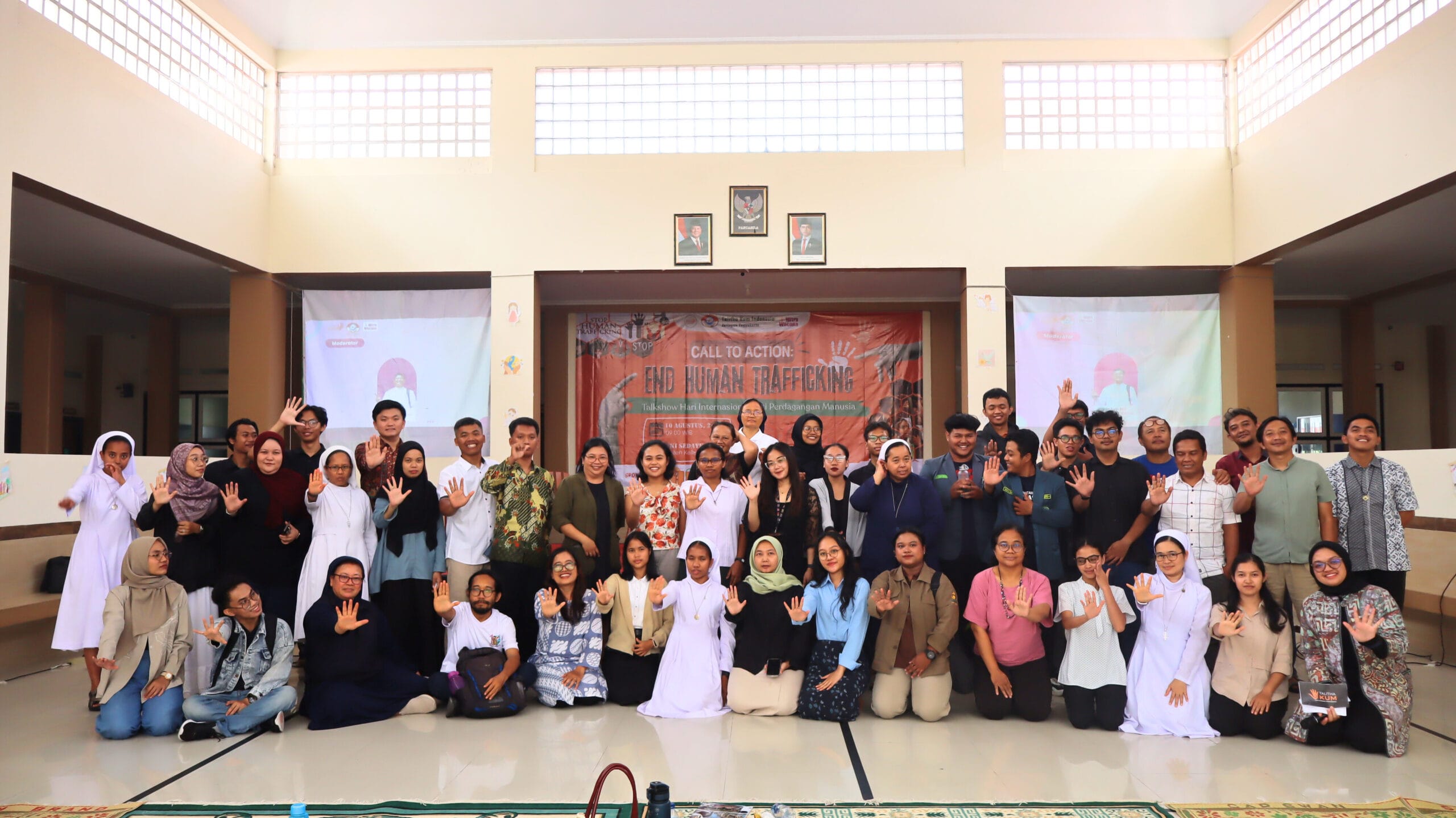
Bantul, 10 Agustus 2025 – Suasana hangat namun penuh semangat terasa di aula Hellen Keller, Sedayu, Bantul, Yogyakarta pada Minggu pagi. Puluhan peserta dari berbagai kalangan berkumpul untuk mengikuti acara “Call to Action: Stop Human Trafficking”, sebuah inisiatif kolaboratif antara jaringan Talitha Kum Jaringan Yogyakarta dan Mitra Wacana.
Acara ini digelar dalam rangka memperingati Hari Anti Perdagangan Internasional, dengan tujuan mengajak masyarakat memahami dan terlibat aktif dalam upaya menghentikan praktik perdagangan manusia yang masih marak terjadi di berbagai belahan dunia, termasuk di Indonesia.
Isu Lintas Batas: Krisis Iklim, Kesetaraan Gender, dan Migrasi Aman
Tidak sekadar membahas perdagangan orang secara umum, diskusi ini memperluas perspektif peserta dengan mengaitkan diskusi perdagangan orang denga isu-isu besar lain seperti krisis iklim, kesetaraan gender, dan migrasi aman yang dimoderatori oleh FR. Tyas SCJ.
Dalam kesempatan ini, para narasumber seperti FR. Bambang, SCJ memberikan materi tentang bahaya perdagangan orang, Muazim (Mitra Wacana) mengupas tentang migrasi aman, Yunia Nur Andini (Mitra Wacana) menjelaskan tentang kesetaraan gender, dan Albertus Cristianto menjelaskan bahwa krisis iklim. Kondisi Krisis iklik ini kerap memaksa masyarakat di wilayah rentan untuk berpindah tempat tinggal, dalam situasi migrasi terpaksa, individu—terutama perempuan dan anak sering menjadi target mudah bagi jaringan perdagangan manusia. Kemudian ketidaksetaraan gender memperparah keadaan, karena perempuan kerap memiliki akses terbatas pada informasi, perlindungan hukum, dan sumber daya ekonomi.
“Perubahan iklim memiliki hubungan erat dengan perdagangan orang. Perubahan iklim adalah akar struktural yang membuat kelompok rentan semakin tertekan, sehingga membuka celah bagi eksploitasi. Kita perlu keadilan ekologi dan aksi nyata, sekecil apa pun, untuk melindungi bumi sekaligus melindungi manusia. Perdagangan orang bukan hanya soal kejahatan terorganisir, tapi juga hasil dari sistem yang gagal melindungi kelompok rentan. Krisis iklim dan ketidaksetaraan gender memperbesar risiko itu,” ujar Albertus Cristianto (Talitha Kum).
Kolaborasi dan Aksi Nyata
Acara ini tidak hanya menyampaikan informasi, tetapi juga mendorong aksi nyata. Peserta diajak berdialog, berbagi pengalaman, dan mencari solusi kolaboratif untuk mengatasi masalah perdagangan manusia. Dalam diskusi ini perwakilan sekaligus ketua dewan pengurus Mitra Wacana Wahyu Tanoto menegaskan pentingnya pendidikan publik:
“Setelah pulang, kami berharap kalian menjadi agen perubahan yang mempromosikan pencegahan perdagangan orang, baik di lingkungan sekitar maupun di media sosial. Generasi kalian lebih melek teknologi dibanding generasi saya dulu, yang bahkan belum mengenal media sosial. Zaman saya paling banter cuma pakai Yahoo Messenger—itu pun sudah hebat sekali kala itu. Sekarang ada TikTok, Instagram, dan lain sebagainya yang jangkauannya luar biasa. Semoga apa yang kita lakukan hari ini bisa terdengar oleh seluruh dunia supaya masalah gender, kekerasan, perubahan iklim, dan perdagangan orang tidak hanya jadi pemanis bibir, tapi diwujudkan dalam aksi nyata untuk menghentikan perdagangan manusia. Saya percaya kalian semua adalah kaum muda yang peduli terhadap isu ini. Kita perlu memastikan setiap orang memiliki akses pada informasi yang benar tentang migrasi aman, hak-hak pekerja migran, dan bagaimana melindungi diri dari modus perdagangan manusia.”
Diskusi ini diharapkan menjadi wadah untuk menyebarkan informasi yang benar dan mudah diakses tentang perdagangan manusia, mendorong kebijakan publik yang melindungi hak-hak kelompok rentan, menguatkan solidaritas lintas komunitas untuk memutus mata rantai perdagangan orang.
Menggaungkan Pesan di Tingkat Lokal dan Global
Dengan adanya acara ini, Talitha Kum dan Mitra Wacana berharap pesan “Stop Human Trafficking” dapat menggema tidak hanya di tingkat lokal, tetapi juga menjadi bagian dari gerakan global yang menuntut perlindungan martabat manusia. Perjuangan melawan perdagangan manusia memang panjang, namun melalui pendidikan, kolaborasi lintas sektor, dan kesadaran publik, langkah kecil hari ini di Hellen Keller, Sedayu, bisa menjadi bagian dari perubahan besar di masa depan. (Yngvi)

You may like


SIARAN PERS Hari Anti Perdagangan Orang Sedunia & Peluncuran Kertas Posisi Urgensi Revisi UU PTPPO “Menuju Dua Dekade Tanpa Pembaruan, Korban Terus Berjatuhan” Tier Two Coalition
-
KOPPMI Perkuat Kapasitas Purna Pekerja Migran melalui Pelatihan Manajemen Organisasi dan Pembuatan Pupuk Organik Cair
-
Cegah TPPO, Mitra Wacana dan Disnaker Kulon Progo Adakan Sosialisasi di Pertemuan Rutin PKK Kalurahan Temon Kulon



Berita
Beri Jalan Ulama Perempuan dalam Keanggotaan AHWA di Muktamar 3
Published
3 days agoon
20 August 2026By
Mitra Wacana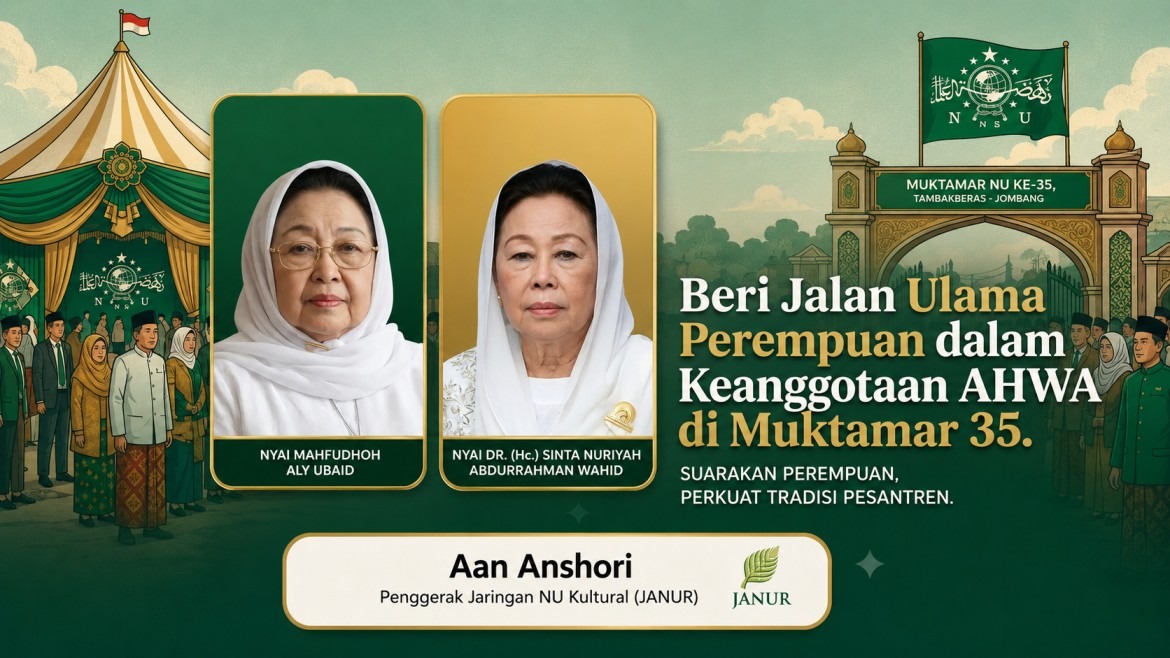
———-
Rilis Jaringan NU Kultural (JANUR)
*”Beri Jalan Ulama Perempuan dalam Keanggotaan AHWA di Muktamar 35″*
Muktamar ke-35 Nahdlatul Ulama di Tambakberas, Jombang, merupakan momentum terbaik untuk memberi ruang yang lebih luas bagi ulama perempuan dalam struktur pengambilan keputusan tertinggi organisasi.
Salah satu ruang tersebut adalah Ahlul Halli wal Aqdi (AHWA), forum yang memiliki posisi strategis, khususnya dalam menentukan kepemimpinan Rais Aam PBNU.
Sejak mekanisme AHWA digunakan dalam Muktamar NU 33, seluruh anggota AHWA yang terpilih adalah laki-laki. Kondisi ini layak dikaji kembali, terutama karena tidak terdapat ketentuan yang secara eksplisit menyatakan bahwa anggota AHWA harus laki-laki.
AHWA semestinya diisi berdasarkan kapasitas keilmuan, integritas, keteladanan, pengabdian, pengaruh, dan kemampuan menjaga kemaslahatan jam’iyah. Jika ukuran tersebut menjadi dasar, maka kesempatan bagi ulama perempuan untuk menjadi bagian dari sembilan anggota AHWA seharusnya terbuka.
Kita tahu NU memiliki tradisi panjang dalam melahirkan ulama perempuan. Mereka tidak hanya aktif dalam Muslimat NU, pesantren, pendidikan, dan pelayanan sosial, tetapi juga berkontribusi dalam pengembangan pemikiran keislaman dan kehidupan kebangsaan.
JANUR meyakini setidaknya ada dua ulama perempuan memiliki kualifikasi di atas.
Pertama, Nyai Dr. (Hc.) Sinta Nuriyah Abdurrahman Wahid; selama puluhan tahun beliau menyuarakan penghormatan terhadap martabat manusia, kesetaraan, dan kehidupan beragama yang inklusif. Pengabdiannya menunjukkan bahwa otoritas keagamaan dan moral perempuan telah menjadi bagian penting dari kehidupan NU dan masyarakat Indonesia. Beliau juga masuk dalam kepengurusan Musytasyar PBNU beberapa periode.
Kedua, Nyai Hj. Machfudhoh Aly Ubaid, ulama perempuan senior yang tumbuh dari tradisi pesantren dan keluarga besar pendiri NU. Putri KH Abdul Wahab Chasbullah ini memiliki pengalaman panjang dalam pendidikan pesantren dan perjuangan NU. Hingga hari ini beliau tetap menjadi rujukan penting di lingkungan NU dan juga tercatat sebagai Mustasyar PBNU.
Kedua tokoh tersebut menunjukkan bahwa NU memiliki sumber daya keulamaan perempuan yang tidak dapat dipandang sebagai pelengkap.
Memberi ruang kepada ulama perempuan dalam AHWA bukan semata-mata persoalan keterwakilan berdasarkan jenis kelamin. Ini merupakan bagian dari upaya memperluas perspektif keulamaan dalam pengambilan keputusan jam’iyah.
Kehadiran ulama perempuan dapat memperkaya pertimbangan keagamaan, sosial, pendidikan, keluarga, dan kemasyarakatan yang dihadapi NU.
Karena itu, Muktamar ke-35 NU di Tambakberas perlu membuka jalan bagi ulama perempuan untuk menjadi bagian dari sembilan anggota AHWA.
Jika kualifikasi AHWA ditentukan oleh ilmu, integritas, keteladanan, pengabdian, dan kemampuan menjaga kemaslahatan NU, maka ulama perempuan yang memenuhi kualifikasi tersebut semestinya mempunyai kesempatan yang sama.
Sudah waktunya NU tidak hanya berbicara tentang pentingnya peran ulama perempuan, tetapi juga memberikan ruang nyata kepada mereka dalam forum strategis pengambilan keputusan organisasi, termasuk dalam 9 anggota AHWA.
Jombang, 19 Agustus 2026.
Aan Anshori (089671597364)
Penggerak JANUR
Alumni Tambakberas (masuk 1988)