Rilis
Mitra Wacana Sebagai Nafas Literasi Kesetaraan Gender di Yogyakarta





Anna de Muinck Keizer university of Amsterdam
The month July is recognized as Anti-Human Trafficking Month (Bulan Anti Perdagangan Manusia) in Indonesia, a nationwide campaign dedicated to raise awareness about human trafficking and promoting coordinated action against exploitation. Human trafficking remains a significant human rights issue in Indonesia. Women, children and migrant workers are vulnerable to exploitation, including forced labour, sexual exploitation, forced marriage and online recruitment scams. Factors such as poverty, limited employment opportunities, unequal access to education and misinformation increase’s people’s vulnerability.
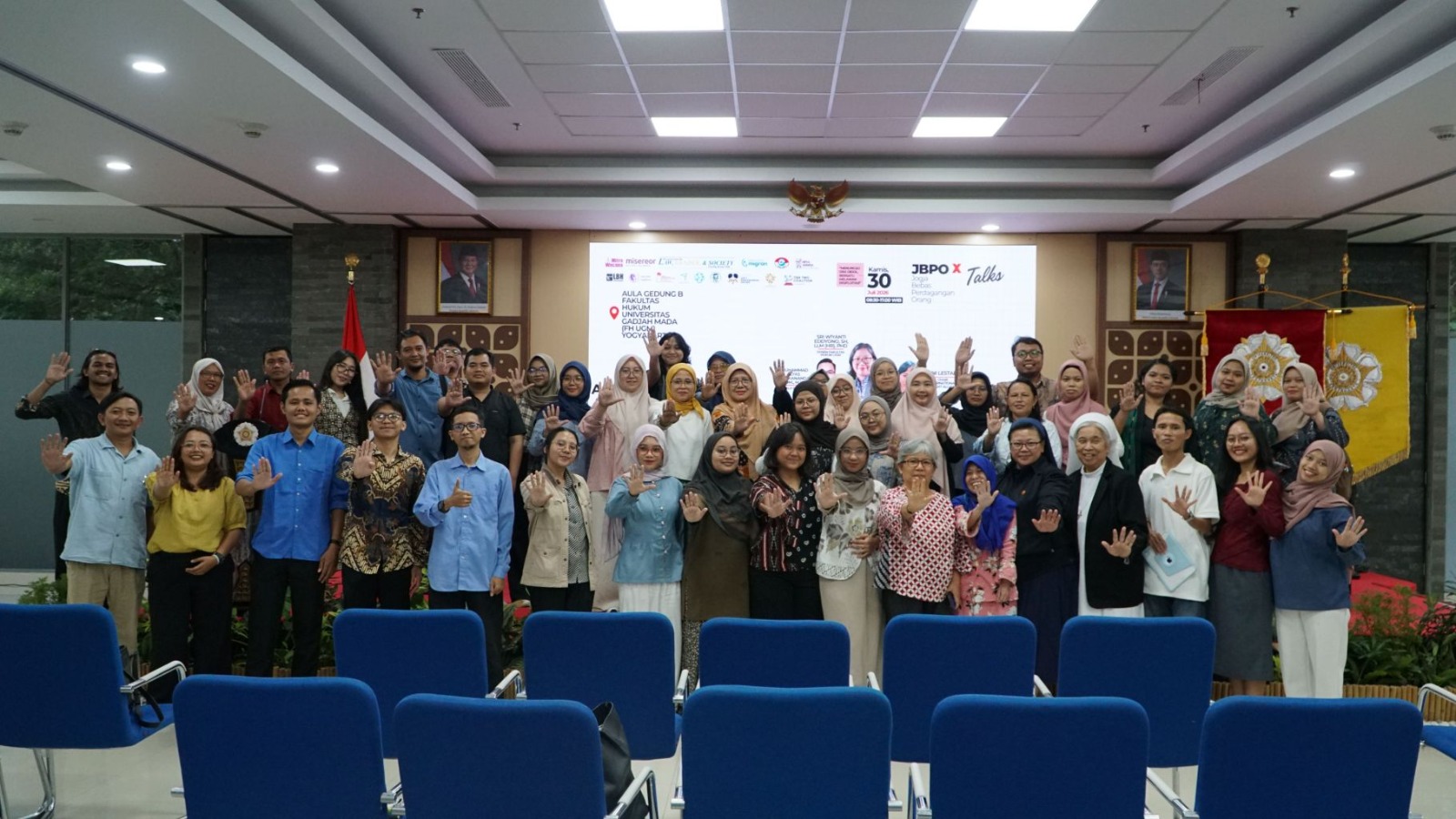
On the 30th of July 2026, organizations, academics, government representatives and community members gathered at the Faculty of Law of Universitas Gadjah Mada (UGM) for an event dedicated to this Anti-Human Trafficking Month. Mitra Wacana collaborated with various organizations to aim to raise awareness about human trafficking while promoting collaboration in prevention, protection and victim support.
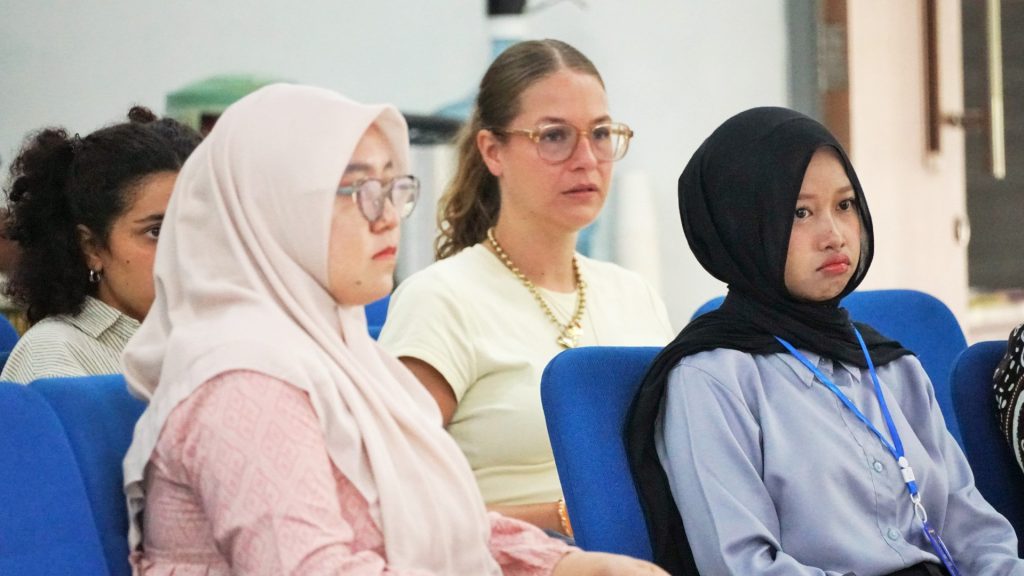
The event opened with participant registration, followed by an opening ceremony featuring welcoming remarkss and a cultural performance. Throughout the day, visitors could also explore a small Bazar, filled with products from local entrepreneurs and creating space for community engagement alongside the educational program.
The day consisted of several panel discussions featuring experts from universities, migrant worker organizations, government members, and legal institutions. The event started with a panel discussion that discussed the theme ‘Facing the New Face of Human Traffiking: Collaboration for Protection and Law Enforcement’. The speakers discussed the increasing vulnerability of migrant workers, online recruitment methods, and the need for stronger legal protection and law enforcement.
The second panel discussion talked about the ‘Collaboration on Prevention and Handling of Human Trafficking: Organizing, Advocacy, Campaigns, Legal and Psychological Assistance’. The presentations from the different organizations emphasized the importance of collaboration between professionals from different sectors, including lawyers, psychologist, educators and local communities.
The last discussion discussed the theme ‘Various Modes of Human Trafficking: from student trafficking, arranged marriages and the role of interfaith networks in preventing and handling human trafficking’. The panel explored the diverse and evolving forms of human trafficking, emphasizing that exploitation can occur in a variety of social and cultural contexts.
Overall, the event provided an opportunity to increase awareness and to strengthen the collaboration between organizations committed to addressing and preventing the human trafficking issue in Indonesia. Through knowledge sharing, practical discussions and community engagement the event reinforced the message that preventing exploitation requires collective responsibility. This message is reflected in the slogan ‘Humans are not for sale, united against exploitation’.


Patriarki dalam Bingkai Spiritual: Menguak Kekerasan Seksual di Lembaga Pendidikan Islam

Memeluk Kebingungan Hidup Bersama Julie dari Film The Worst Person In The World: Perspektif Jean-Paul Sartre

Tubuh yang Lelah dan Jiwa yang Haus Makna: Membaca Fenomena Burnout dari Lensa Filsafat Stoikisme

Apakah Kita Masih Bisa Menjadi “Diri Sendiri” di Era Media Sosial?
Tubuh yang Lelah dan Jiwa yang Haus Makna: Membaca Fenomena Burnout dari Lensa Filsafat Stoikisme

Mencari Warna Langit Bersama Sartre, Nietzsche, dan Kierkegaard: Refleksi Eksistensial di Bawah Kanvas Blue Period


 Opini16 hours ago
Apakah Kita Masih Bisa Menjadi “Diri Sendiri” di Era Media Sosial?
- Opini16 hours ago
Tubuh yang Lelah dan Jiwa yang Haus Makna: Membaca Fenomena Burnout dari Lensa Filsafat Stoikisme
- Opini16 hours ago
Mencari Warna Langit Bersama Sartre, Nietzsche, dan Kierkegaard: Refleksi Eksistensial di Bawah Kanvas Blue Period
- Opini16 hours ago
Memeluk Kebingungan Hidup Bersama Julie dari Film The Worst Person In The World: Perspektif Jean-Paul Sartre
- Opini15 hours ago
Patriarki dalam Bingkai Spiritual: Menguak Kekerasan Seksual di Lembaga Pendidikan Islam
- Opini17 hours ago
Nongkrong di Kafe: Antara Kebutuhan Kafein dan Pelarian Eksistensial
- Opini19 hours ago
Pembungkaman Eksistensial pada Tokoh Aurelie dalam Novel Broken Strings
- Opini17 hours ago
Mahasiswa KKN Kelompok 4 Universitas Serasan Pelajari Pemanfaatan Limbah Kotoran Burung Puyuh sebagai Pupuk Organik untuk Budidaya Pepaya, Semangka, dan Pisang di Desa Darmo