
Rilis
Pengenalan Omah Perempuan Sinau Desa di Kabupaten Kulonprogo



Berita
Bersatu Melawan Perdagangan Orang: JBPO Gelar Kegiatan Memperingati Bulan Anti Perdagangan Manusia Sedunia
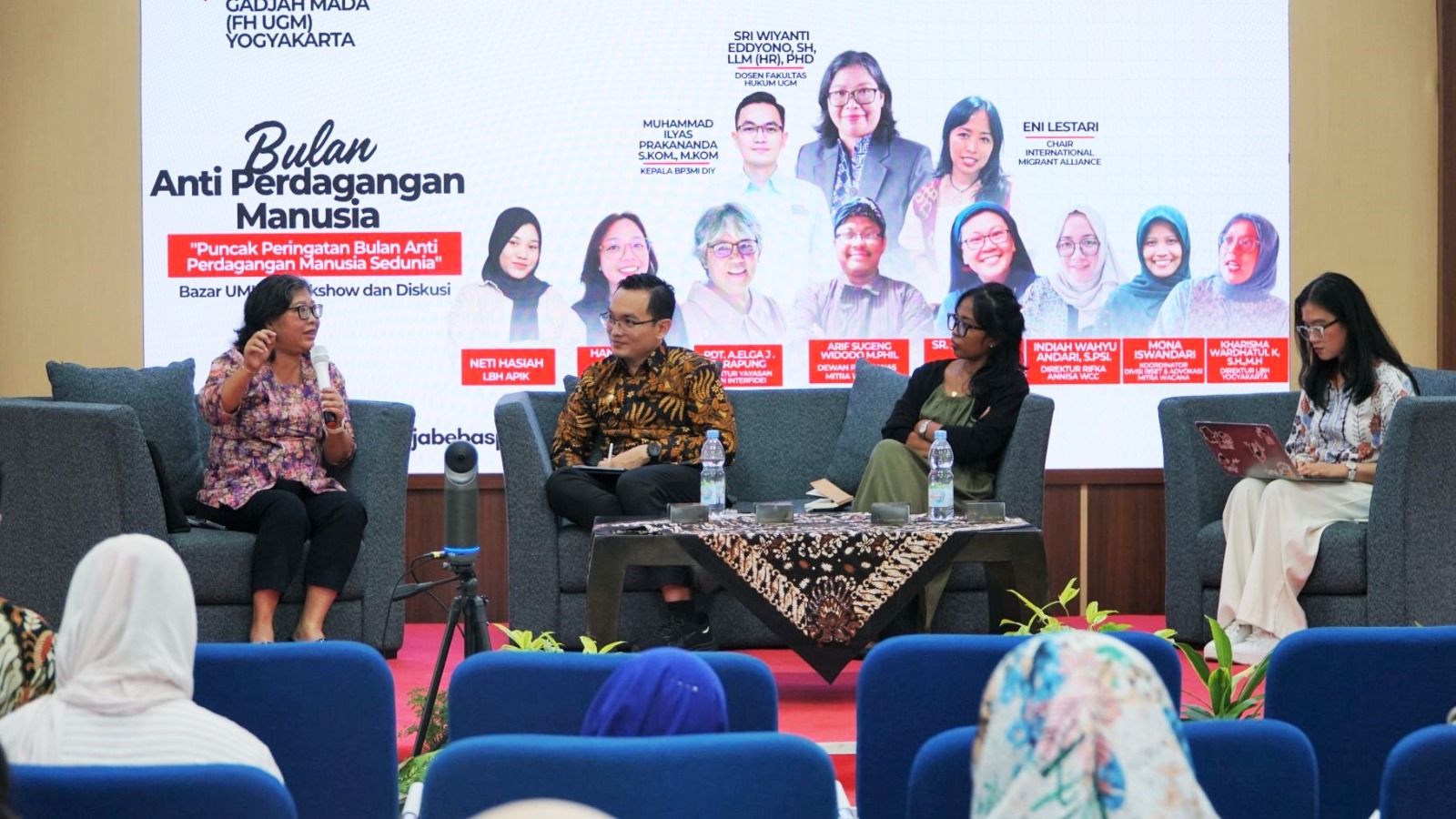
Pada hari Kamis (30/07/2026) Jaringan Jogja Bebas Perdagangan Orang (JBPO) menggelar kegiatan puncak acara untuk Peringatan Hari Anti Perdagangan Manusia Sedunia yang bertajuk “Menungso Ora Didol, Bersatu Melawan Eksploitasi”, kegiatan ini terlaksana di Aula Gedung B Fakultas Hukum Universitas Gadjah Mada (FH UGM) Yogyakarta. Acara ini terselenggara atas dukungan kolaborasi dari Mitra Wacana, Pusat Kajian Law Gender Society Fakultas Hukum UGM, Beranda Migran, Talitha Kum Jaringan Yogyakarta, Rifka Annisa WCC, LBH Yogyakarta, LBH Apik Yogyakarta, Yayasan DIAN Interfidei, Indriyanati, Koppmi, Jarnas Anti Perdagangan Orang, BP3MI DIY, dan Tier Two Coalition. Rangkaian acara diisi dengan kegiatan talkshow sebanyak tiga sesi dengan topik yang berbeda dan diskusi mendalam bersama berbagai narasumber ahli, praktisi, dan aktivis yang bergerak di garis depan perlindungan hak asasi manusia.
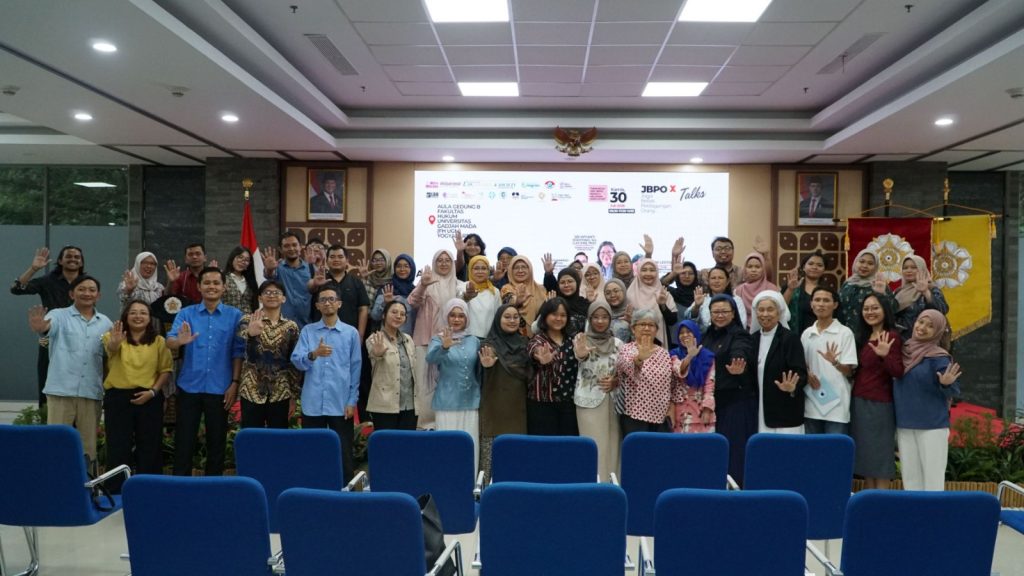
Acara dimulai dengan sambutan dari Prof. Dr. Heribertus Jaka Triyana, S.H., LL.M., M.A. selaku Wakil Dekan Fakultas Hukum UGM. Ia menyampaikan harapan dengan adanya kegiatan ini, isu tentang Tindak Pidana Perdagangan Orang dapat lebih diperhatikan lagi untuk kedepannya, kemudian memberikan pengetahuan akan langkah-langkah dan rencana yang dapat dilakukan untuk mengatasi isu perdagangan orang.
Kemudian dilanjut dengan sambutan dari Arif Sugeng Widodo M.Phil selaku Dewan Pengawas Mitra Wacana, Arif menyampaikan dalam pencegahan tindak pidana perdagangan orang perlu adanya kolaboratif dari seluruh elemen masyarakat, supaya pencegahan tidak hanya berhenti dalam ruang diskusi, tapi bisa diamalkan dalam kerja praktis.
Untuk talkshow sesi pertama materi yang dipaparkan bertajuk Menghadapi Wajah Baru Perdagangan Orang: Kolaborasi untuk Perlindungan dan Penegakan Hukum, sesi ini diisi oleh tiga pemateri yaitu Eni Lestari (Chair International Migrant Alliance), Muhammad Ilyas Prakananda,S.Kom,M.Kom (Kepala BP3MI DIY), Sri Wiyanti Eddyono SH, LLM (HR), PHD (Dosen Fakultas Hukum UGM). Pada sesi talkshow pertama ketiga pembicara menjelaskan bagaimana menghadapi dan mencegah perdagangan orang yang memiliki pola baru dalam melakukan aksinya, sesi ini salah satu pembicara mengatakan bahwa aktivitas migrasi berubah menjadi tujuan untuk bertahan hidup karena banyaknya krisis global yang terjadi. Pada sesi ini juga menyoroti walaupun peraturan hukum di Indonesia terlihat banyak, tetapi pada realitanya terdapat kontradiksi antara UU satu dengan yang lain.
“Di Indonesia peraturan hukum terlihat sudah banyak, tapi ternyata terdapat kontradiksi antara UU tersebut.”
Lanjut pada talkshow sesi kedua, tema yang diangkat adalah Kolaborasi Pencegahan dan Penanganan Perdagangan Orang: Pengorganisasian, advokasi, kampanye, pendampingan hukum dan psikologis. Pada sesi ini diisi oleh SR. Anastasia (Koordinator Talitha Kum Jaringan Yogyakarta), Mona Iswandari (Koordinator Divisi Riset dan Advokasi Mitra Wacana), Indiah Wahyu Andari.S.Psi (Direktur Rifka Anisa WCC), dan Kharisma Wardhatul K,S.H,M.H. (Direktur LBH Yogyakarta). Pada talkshow sesi kedua ini para pembicara menyampaikan bahwa perlu adanya kolaborasi dalam pencegahan dan penanganan untuk isu TPPO baik hukum atau psikologis pada korban. Di sesi ini juga menyoroti bahwa korban bukan hanya dari kalangan orang dewasa tetapi juga meluas sampai ke pelajar. Kemudian dalam penanganan psikologis dapat dilakukan dengan mendengarkan tanpa menghakimi serta memberikan rasa aman bagi korban. Sesi terakhir pada talkshow kedua ini menekankan bahwa perlu adanya penguatan terhadap pemahaman dan kesadaran hukum.
“Kepedulian aparat penegak hukum masih sangat minim. Dalam restitusi korban TPPO masih sangat sulit, karena proses yang banyak hambatan yang terjadi.”
Selanjutnya pada talkshow sesi terakhir dengan tema Berbagai modus perdagangan orang; dari student trafficking, nikah pesanan serta peran jaringan lintas iman dalam pencegahan dan penanganan perdagangan orang. Pada sesi ini akan diisi oleh Hanindha Kristy (Direktur Beranda Migran), Neti Hasiah (LBH APIK), Pdt. A. Elga J. Sarapung (Direktur Yayasan DIAN Interfidei). Pada sesi talkshow ketiga ini berisi bentuk bentuk dari modus perdagangan orang, yang bukan hanya terjadi pada orang dewasa tetapi juga para pelajar. Dalam modusnya berbentuk seperti tawaran magang dan tawaran nikah pesanan. Pada sesi ini juga menyoroti pentingnya jaringan antar agama dalam melakukan pencegahan dan dan penanganan perdagangan orang, hal ini karena human trafficking adalah persoalan kemanusiaan yang sangat serius sehingga jaringan antar agama juga penting untuk telibat.
Dalam sesi diskusi, peserta menunjukkan antusiasme yang besar dengan memberikan tanggapan dan pertanyaan yang bervariatif di setiap rangkaian sesi talkshow yang. Kemudian pertanyaan dari peserta juga dijawab dengan jawaban yang informatif oleh para pembicara.
Sebagai penutup acara, JBPO memberikan harapan bahwa kegiatan pencegahan ini bukan hanya tanggung jawab lembaga saja tetapi tanggung jawab kita sebagai warga negara Indonesia harus berkolaborasi untuk berupaya dalam pencegahan dan memberikan perlindungan kepada korban-korban tindak pidana perdagangan orang. Serta diharapkan peserta bisa menyebarluaskan informasi yang diperoleh saat mengikuti kegiatan, agar kegiatan ini tidak hanya berhenti dalam bentuk ruang diskusi, tapi bisa diimplementasikan dalam kerja praktis.
Meilina Salsabila (Mahasiswa Magang UNS)


Bersatu Melawan Perdagangan Orang: JBPO Gelar Kegiatan Memperingati Bulan Anti Perdagangan Manusia Sedunia

SIARAN PERS Hari Anti Perdagangan Orang Sedunia & Peluncuran Kertas Posisi Urgensi Revisi UU PTPPO “Menuju Dua Dekade Tanpa Pembaruan, Korban Terus Berjatuhan” Tier Two Coalition


