Rilis
Profil Kelurahan Sindurjan Kabupaten Purworejo

Published
14 years agoon
By
Mitra Wacana
PROFIL KELURAHAN SINDURJAN
Moto
Dengan tekad pengabdian siap melayani masyarakat dengan ramah, tepat, cepat & Professional
Visi
Profesional dalam membina, melayani danm emfasilitasi menuju kesejahteraan masyarakat
Misi
1) Menyelenggarakan tugas pemerintahan
2) Menyelenggarakan tugas pembangunan
3) Menyelenggarakan tugas kemasyarakatan
4) Menyelenggarakan tugas administrasi pemerintahan kelurahan Sindurjan.
5)Melaksanakan sebagian kewenangan camat purworejo yang di limpahkan padakelurahan
Janji layanan
1) Kami siap melayani masyarakatdengan sikap ramah, sopan, tulus, ikhlas.
2) Kami siap melayani masyarakat dengan secara cepat, benar & maksimal.
3) Kami siap melayani dengan standar waktu cepat.
4) Kami siap melayani masyarakat secara professional dengan memberikan perlakuan yang sama agar masyarakat perduli.
Wilayah : Kelurahan Sindurjan terletak di wilayah kecamatan purworejo, kabupaten purworejo, Jawa Tengah.
Secara administratif terdiri dari 8 RW dan 37 RW
Batas Administrasi Kelurahan Sindurjan
Sebelah utara : Mranti
Sebelah Selatan : Pangen Juru Tengah
Sebelah timur : Purworejo
Sebelah barat : Paduroso
Kelembagaan Pemerintah
1) Lurah : H. Muhamad Komari, SIP
2) Sekertaris : Galuhbakti P.S, STP, Staf : Amat Kulyabi : Indrianinurhanifah A.MD
3) Kasi pemerintahan : Sujoko R.S ->Staf : Karnoto teguh W
4) Kasi pembangunan : Ana sumiyarsi, SE
5) Kasi kesejahteraan rakyat : NK Ardiningsih, SE
6) Kasi pemberdayaan masyarakat: Zubaedi ->Staf : Sutiyah BSC
Kependudukan
Jumlah penduduk kelurahan Sindurjan menurut jenis kelamin berjumlah 6.570 orang dengan estimasi 3.108 laki – laki dan 3.462 perempuan.
Jumlah penduduk menurut agama dan kepercayaan terhadap tuhan yang maha esa yaitu:
1) Islam : 6.600 orang
2) Kristen : 328 orang
3) Katolik : 266 orang
4) Hindu : 15 orang
5) Budha : 5 orang
Jumlah penduduk menurut mata pencaharian
1) Pensiun :387 orang
2) PNS : 404 orang
3) TNI : 286 orang
4) Kepolisian : 25 orang
5) Perdagangan : 72 orang
6) Petani : 53 orang
7) Peternak :1 orang
8) Perikanan :1 orang
9) Peneliti :1 orang
10) Sopir : 1 orang
11) Wiraswasta :706 orang
12) Karyawan swasta :873 orang
13) Karyawan BUMN : 4 orang
14) Karyawan BUMD : 2 orang
15) Buruh harian lepas : 478 orang
16) Buruhtani : 9 orang
17) Pekerja rumah tanggat : 10 orang
18) Tukang listrik : 2 orang
19) Tukang batu : 2 orang
20) Penata rambut : 1 orang
21) Wartawan : 1 orang
22) Dosen : 2 orang
23) Guru : 122 orang
24) Dokter : 11 orang
25) Bidan : 2 orang
26) Perawat : 14 orang
27) Ibu rumah tangga : 1.046 orang
28) Belum bekerja : 1.382 orang
Kelembagaan Ekonomi
1) Toko : 13
2) Warung : 56
3) Bank : 1
4) Pengacara : 2
5) Supermarket : 2
6) ATM : 1
7) Kios foto copy : 4
Kelembagaan Pendidikan
1) PAUD : 3bangunan
2) TK : 5bangunan
3) SD :3 bangunan
4) SLTP : _
5) SLTA NEGRI : 2 bangunan
6) SLTA SWASTA : 1bangunan
7) Kejarpaket ; 1 bangunan
8) Pondokpesantren : 2 bangunan
9) SLB : 2 bangunan
Sarana Prasarana
Peribadatan
1) Masjid : 1
2) Mushola : 15
3) Gereja : _
4) Vihara : _
5) Pura : –
Prasarana perhubungan
1) Jalan dusun : 7 KM
2) Jalan desa : 2 KM
3) Jalan Ekonomi : 6 KM
4) Jalan protokol : 7 KM
5) Jalan propinsi : 1 KM
Prasarana Pengairan
1) Saluran irigasi : 3 meter
2) Gorong – gorong : 12 buah
3) Pembagian air : 3 buah
Prasarana kesehatan
1) Puskesmas pembantu : 1 bangunan
2) BKIA : 1 bangunan
3) RS bersalin : 1 bangunan
Penyandang masalah kesejahteraan social [PMKS ]
1) Anak balita terlantar : 21 L 16 P
2) Anak terlantar : 59 L 43 P
3) Anak nakal : 11 L
4) Wanita rawan sosial ekonomi : 73 P
5) Lanjut usia terlantar : 14 L 50 P
6) Anak cacat : 3 L 3 P
7) Penyandang cacat : 73 orang
8) Keluarga fakir miskin : 442 orang
9) Keluarga rumah tak layak huni : 91 orang
10) Keluarga bermasalah sosial : 5 orang
Potensi Kelurahan
1.Pemukiman
Kelurahan Sindurjan memang sangat berpotensi sebagai kawasan pemukiman karena berada di perkotaan dengan sarana prasarana yang relative lengkap & kemudahan akses untuk menjangkau lokasi fasilitas umum yang di butuhkan masyarakat. Walaupun masih banyak rumah – rumah dipinggir rel kereta api, kebanyakan mereka pendatang, sehingga masih banyak terjadi KDRT. Dlm minggu keda bulan maret ada 2 kasus yang sudah melapor ke P2TP2A.
2.Sarana pendidikan
Sarana pendidikan cukup memadaidari PAUD, TK, SD, SLTA, KEJAR PAKET, PONPES & SLB sudah tersebar secara merata di wilayah kelurahan sindurjan.
Kelembagaan
Kelembagaan dari kelurahan, PKK, PNPM, KIM, PLKB, karang taruna sudah terjalin dengan baik sehingga pembangunan dalam bidang bina masyarakat , bina lingkungan & bina usaha dapat berjalan lancar.
3.Perekonomian
Di kelurahan Sindurjan ada beberapa home industri
Home industri yang meproduksi aneka roti bolu dan sudah dapat melayani pesanan ratusan roti. Home industri memproduksi roti tawar dansudah bias memasok hamper seluruh pedagang roti bakar di kabupatenPurworejo.
Distributor mie instan, permen &aneka plastic.
Ada 1 radio “ POP FM “
Kegiatan – kegiatan penting
1) Merti desa masih dilakukan 1 tahun sekali.
2) Pengajian PKK rutin di lakukan tiap bulan.
3) Arisan / perkumpulan PKK kelurahan rutin dilakukan setiap tgl 4.
4) Melalui PNPM sudah melakukan beberapa pelatian diantaranya :menyulam, memasak, computer, bordir.
5) Mengajukan proposal untuk perombakan 20 rumah @ Rp 5.000.000 dengan kriteria: tanah bersertifikat, lantai tanah, dinding bambu.
6) Pertemuan PLKB rutin di lakukan setiap tgl 20 di balai pertemuan Sindurjan.
7) KIM [kelompok interaktif masyarakat ] anggotanya dari semua RW pertemuan sebulan sekali ,tempat bergilir.

You may like

Berita
Beri Jalan Ulama Perempuan dalam Keanggotaan AHWA di Muktamar 3
Published
3 days agoon
20 August 2026By
Mitra Wacana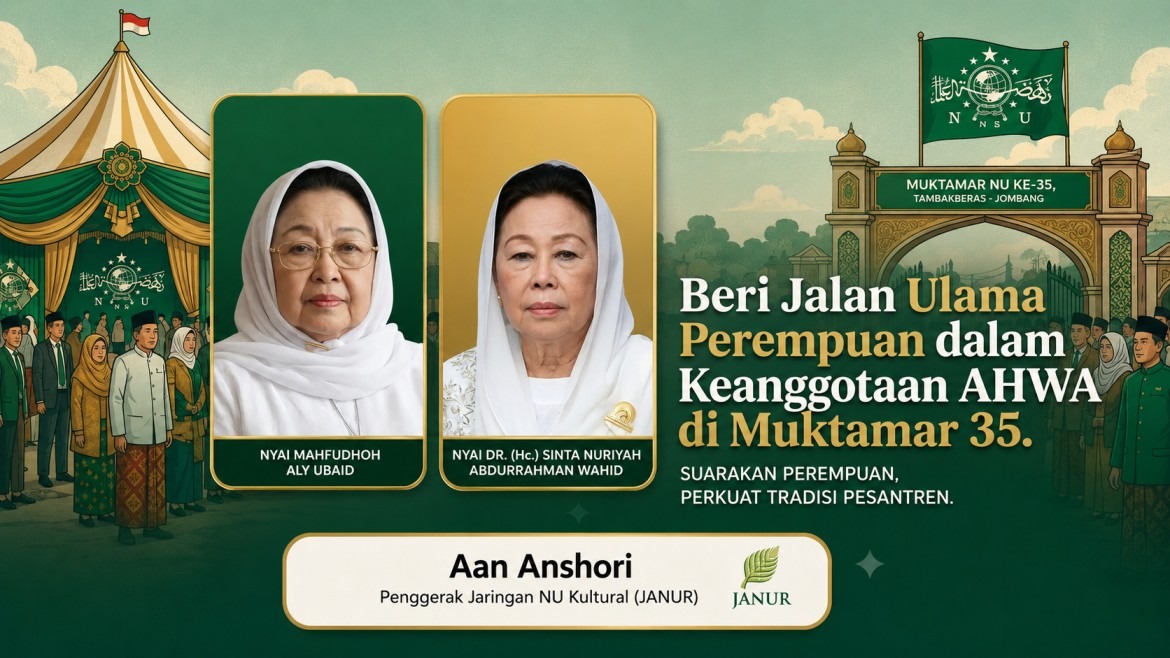
———-
Rilis Jaringan NU Kultural (JANUR)
*”Beri Jalan Ulama Perempuan dalam Keanggotaan AHWA di Muktamar 35″*
Muktamar ke-35 Nahdlatul Ulama di Tambakberas, Jombang, merupakan momentum terbaik untuk memberi ruang yang lebih luas bagi ulama perempuan dalam struktur pengambilan keputusan tertinggi organisasi.
Salah satu ruang tersebut adalah Ahlul Halli wal Aqdi (AHWA), forum yang memiliki posisi strategis, khususnya dalam menentukan kepemimpinan Rais Aam PBNU.
Sejak mekanisme AHWA digunakan dalam Muktamar NU 33, seluruh anggota AHWA yang terpilih adalah laki-laki. Kondisi ini layak dikaji kembali, terutama karena tidak terdapat ketentuan yang secara eksplisit menyatakan bahwa anggota AHWA harus laki-laki.
AHWA semestinya diisi berdasarkan kapasitas keilmuan, integritas, keteladanan, pengabdian, pengaruh, dan kemampuan menjaga kemaslahatan jam’iyah. Jika ukuran tersebut menjadi dasar, maka kesempatan bagi ulama perempuan untuk menjadi bagian dari sembilan anggota AHWA seharusnya terbuka.
Kita tahu NU memiliki tradisi panjang dalam melahirkan ulama perempuan. Mereka tidak hanya aktif dalam Muslimat NU, pesantren, pendidikan, dan pelayanan sosial, tetapi juga berkontribusi dalam pengembangan pemikiran keislaman dan kehidupan kebangsaan.
JANUR meyakini setidaknya ada dua ulama perempuan memiliki kualifikasi di atas.
Pertama, Nyai Dr. (Hc.) Sinta Nuriyah Abdurrahman Wahid; selama puluhan tahun beliau menyuarakan penghormatan terhadap martabat manusia, kesetaraan, dan kehidupan beragama yang inklusif. Pengabdiannya menunjukkan bahwa otoritas keagamaan dan moral perempuan telah menjadi bagian penting dari kehidupan NU dan masyarakat Indonesia. Beliau juga masuk dalam kepengurusan Musytasyar PBNU beberapa periode.
Kedua, Nyai Hj. Machfudhoh Aly Ubaid, ulama perempuan senior yang tumbuh dari tradisi pesantren dan keluarga besar pendiri NU. Putri KH Abdul Wahab Chasbullah ini memiliki pengalaman panjang dalam pendidikan pesantren dan perjuangan NU. Hingga hari ini beliau tetap menjadi rujukan penting di lingkungan NU dan juga tercatat sebagai Mustasyar PBNU.
Kedua tokoh tersebut menunjukkan bahwa NU memiliki sumber daya keulamaan perempuan yang tidak dapat dipandang sebagai pelengkap.
Memberi ruang kepada ulama perempuan dalam AHWA bukan semata-mata persoalan keterwakilan berdasarkan jenis kelamin. Ini merupakan bagian dari upaya memperluas perspektif keulamaan dalam pengambilan keputusan jam’iyah.
Kehadiran ulama perempuan dapat memperkaya pertimbangan keagamaan, sosial, pendidikan, keluarga, dan kemasyarakatan yang dihadapi NU.
Karena itu, Muktamar ke-35 NU di Tambakberas perlu membuka jalan bagi ulama perempuan untuk menjadi bagian dari sembilan anggota AHWA.
Jika kualifikasi AHWA ditentukan oleh ilmu, integritas, keteladanan, pengabdian, dan kemampuan menjaga kemaslahatan NU, maka ulama perempuan yang memenuhi kualifikasi tersebut semestinya mempunyai kesempatan yang sama.
Sudah waktunya NU tidak hanya berbicara tentang pentingnya peran ulama perempuan, tetapi juga memberikan ruang nyata kepada mereka dalam forum strategis pengambilan keputusan organisasi, termasuk dalam 9 anggota AHWA.
Jombang, 19 Agustus 2026.
Aan Anshori (089671597364)
Penggerak JANUR
Alumni Tambakberas (masuk 1988)